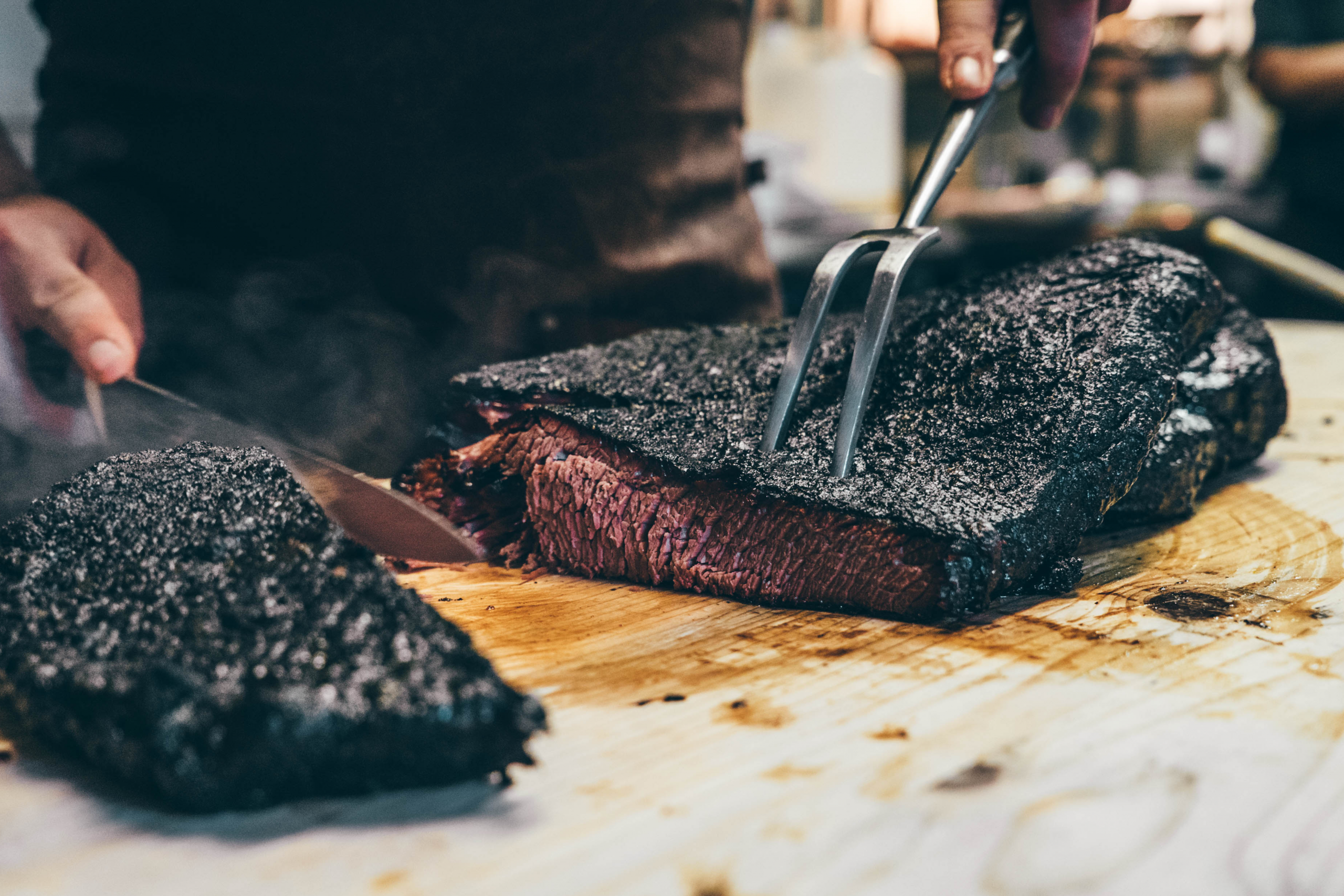
That crunchy, smoky crust – here’s how we get it.
It’s the thing people remember. That deep, dark, flavour-packed crust on the outside of the brisket – smoky, peppery, a little chewy, a little crunchy. That’s the bark. And if you know BBQ, you know: no bark, no bragging rights.
But good bark doesn’t happen by accident. It’s not magic. It’s science, patience, and doing a few key things right – every time.
Let’s break it down.
First Off, What is Bark?
It’s not burned. It’s not a “rub” that stuck around. Bark is a layer of proteins, sugars, fat, smoke, and seasoning that slowly builds up on the meat’s surface during a long, low cook.
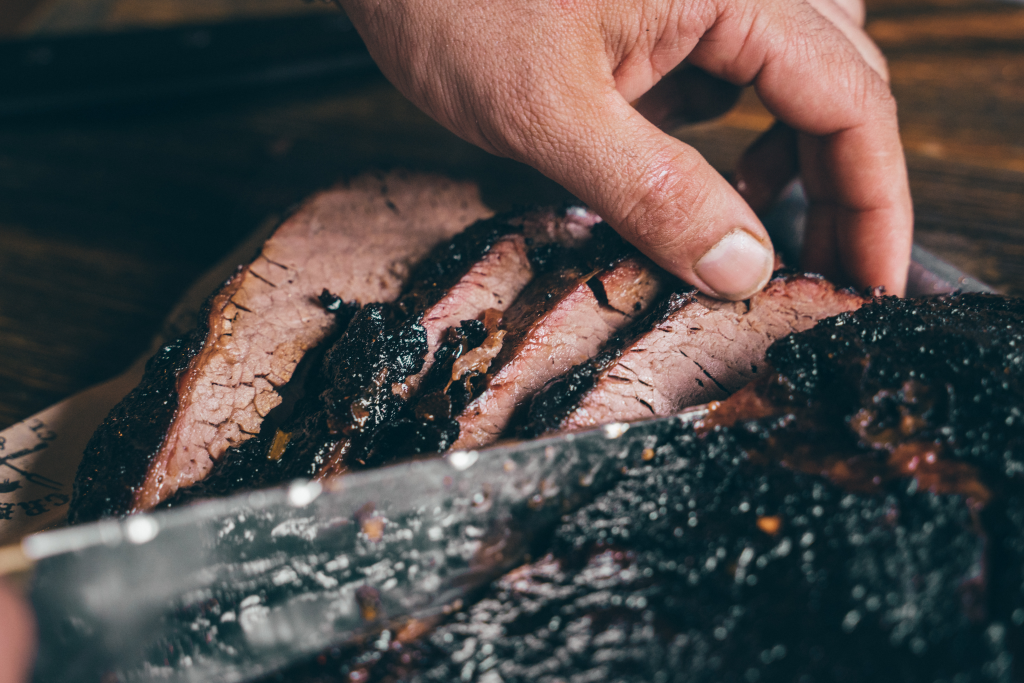
In short:
Protein + smoke + seasoning + time = bark.
That’s it.
1. Start with the Right Rub
You need a rub that’s simple and dry. Bear in mind: sugar melts. Salt pulls moisture out. Pepper and paprika give some colour.
A few of our favourites (emphasis on a few, we wouldn’t want to give all our secrets away).
- Coarse black pepper
- Kosher salt
- Smoked paprika
- Brown sugar
- Garlic powder
- Onion powder
Keep it coarse. The texture helps create that crust. Fine powdery rubs can melt away.
2. Keep That Surface Dry
Don’t wrap your brisket in marinade. Don’t slather it in oil. You want the surface to be dry when it hits the smoker. If it’s too wet, you’ll steam the outside – no bark.
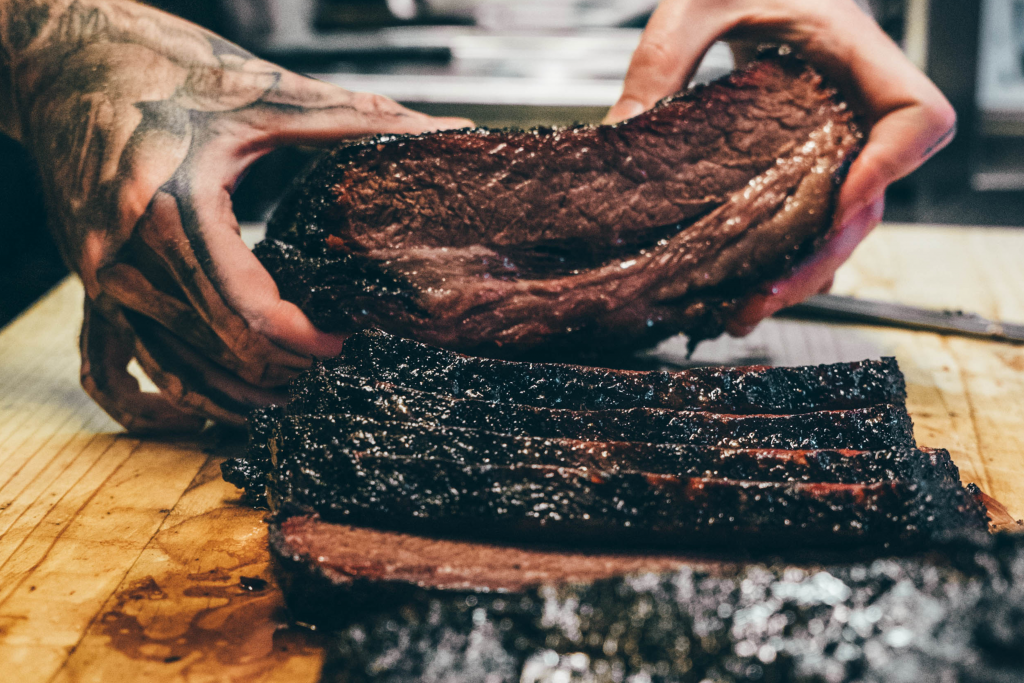
Tip: Pat your brisket dry with paper towels. Rub it generously. Let it sit out for 30–60 mins before smoking.
3. Low and Slow – Don’t Cheat
We smoke our brisket low and slow. Think 107°C, sometimes a touch higher. The low heat gives proteins time to react with the smoke and dry rub – creating that crust layer bit by bit.
If you rush it? The bark won’t have time to form. It’ll just be soft, greasy meat.
4. Leave It Unwrapped – At Least for a While
Some people wrap brisket in foil halfway through (Texas Crutch). That’s fine – it helps push through the stall – but don’t wrap too early or you’ll kill your bark.
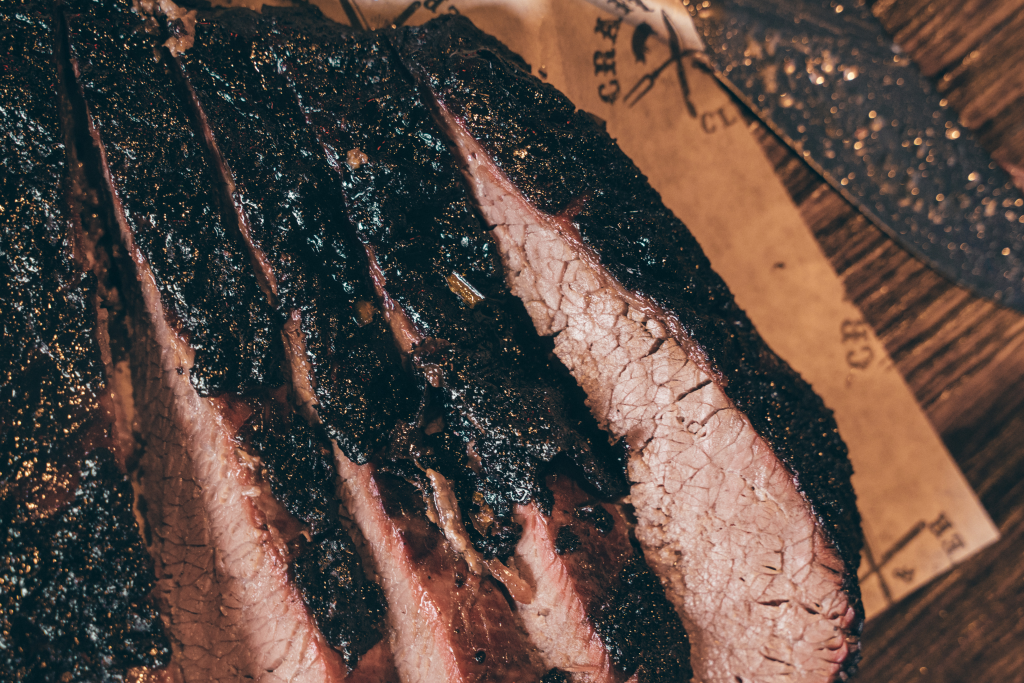
We usually wait until the bark is firm, dark, and not coming off on your finger when you touch it. Then, and only then, do we wrap (if we’re wrapping at all).
5. Let the Smoke Do Its Thang
The smoke isn’t just for flavour. It reacts with the outer layer of the meat to help darken and crisp it. That’s why you need a good clean fire – not too much white smoke, no bitterness.
Wood choice matters: We often use a mix of oak and hickory for deep, even smoke without overpowering it.
6. Don’t Spritz Too Often
We get it – you want to spritz. But every time you open the lid, you lose heat and moisture, and if you do it too early, you soften the bark before it forms.
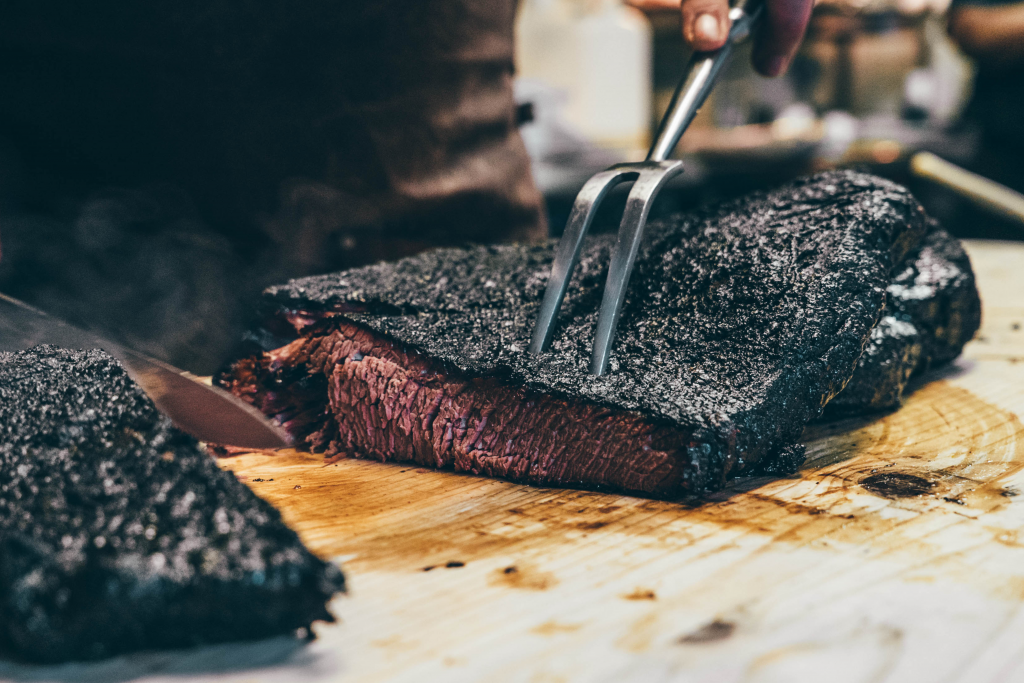
We wait until the bark is solid, then spritz lightly with apple cider vinegar or water every 45 minutes or so.
7. Let It Rest
Once your brisket’s done, rest it. At least 1 hour, off the heat. That bark will firm up a bit more, and the juices will stay where they should – inside the meat, not all over your chopping board.
Final Thoughts: Bark Isn’t Optional
If you’re putting 10–14 hours into a brisket, don’t skip the details that get you that bold, blackened bark. It’s not just for looks. It’s texture, flavour, and everything good about BBQ – all in one bite.
Craft & Cleaver brisket is smoked fresh, low and slow, with an unmistakable bark that keeps our guests coming back.
No shortcuts. Just BBQ done right.